Pre-cut plywood panels prepared to the approved case dimensions.
Component supply / 03
Flat-Pack Kits
& Components
Pre-cut panels, aluminum profiles, hardware and foam supplied for local assembly by case makers and distributors.
Discuss your BOM ↗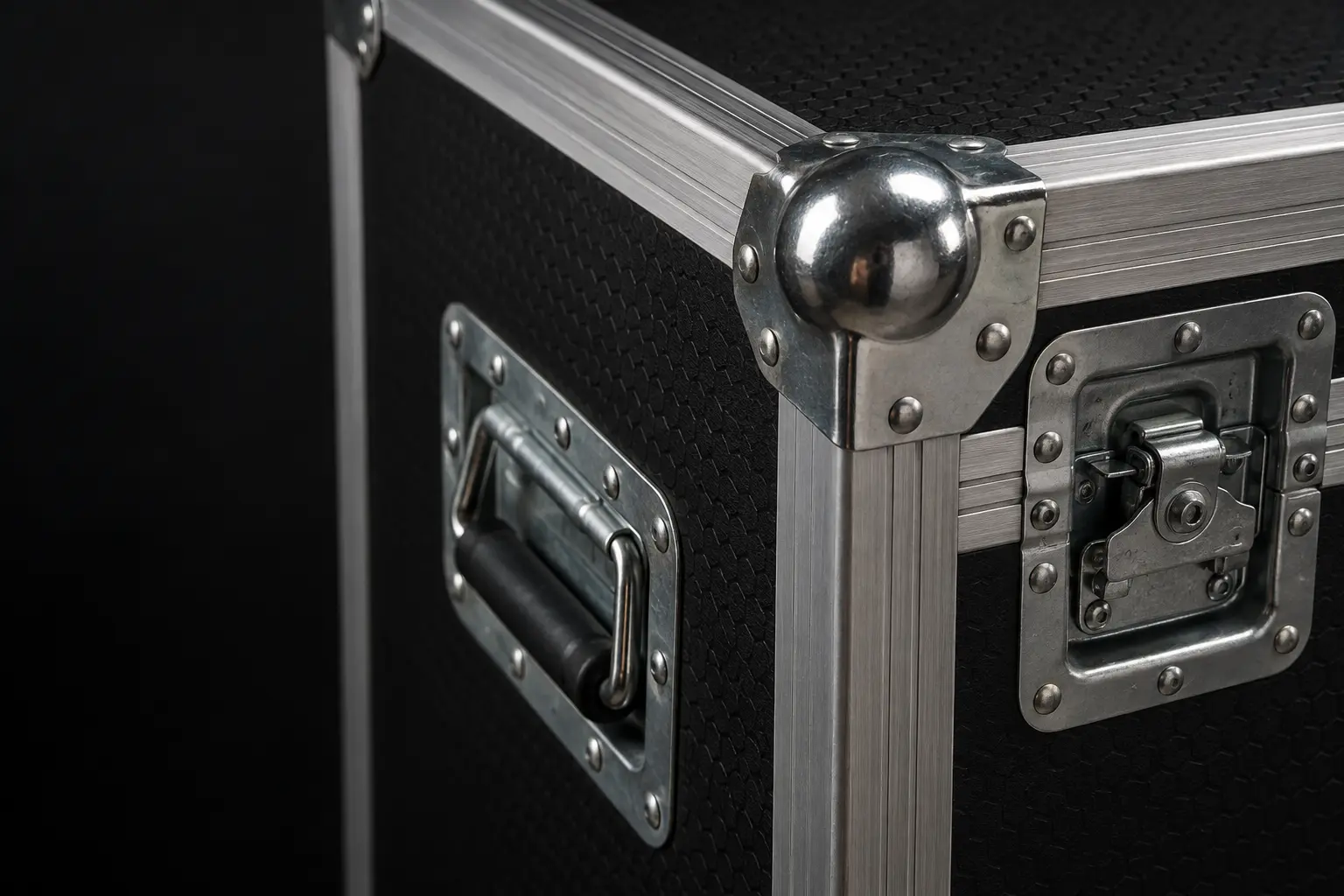
SUPPLY SCOPE
Prepared as one coordinated build.
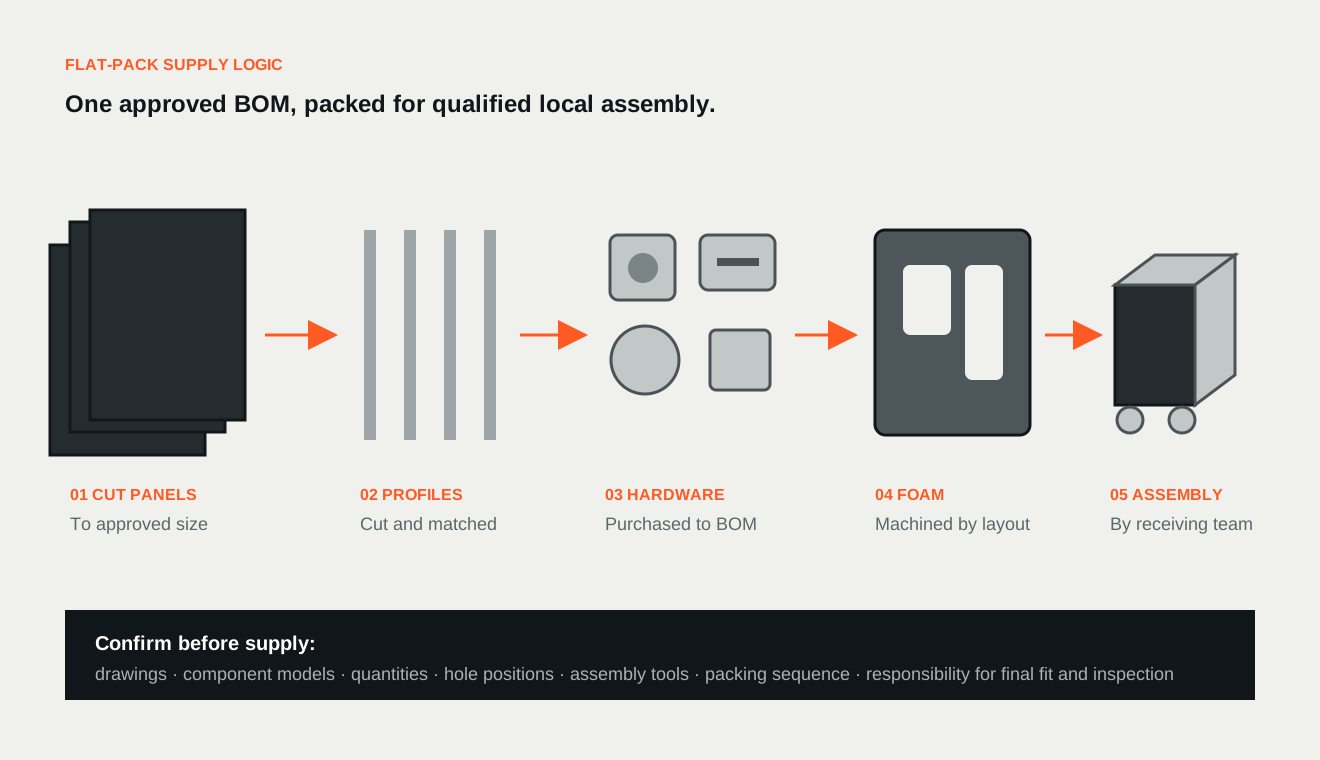
Cut aluminum extrusions and corner sections matched to the panel set.
Purchased handles, latches, corners, hinges, fasteners and casters selected to the approved bill of materials.
Machined interior components supplied when included in the project scope.
KIT DEFINITION
A kit is more than loose hardware.
The panel set, aluminum profiles, purchased hardware, foam and fasteners must follow the same approved drawing and bill of materials. We review the receiving team's assembly capability before confirming that flat-pack supply is suitable.
Panels and profiles are cut to the agreed dimensions. Hole positions, component models and supplied fasteners are confirmed in the project documents.
Parts can be grouped by case or assembly stage. Protective packing and export-carton requirements depend on quantity, component finish and transport route.
The local assembler controls final squareness, fastening, seal alignment, hardware operation and finished-case inspection. These responsibilities should be agreed before ordering.
SUITABILITY CHECK
When flat-pack makes sense.
Who is this supply model for?
It is most suitable for case makers, distributors or production teams that already understand flight-case assembly and have the tools to control dimensions, riveting, alignment and final inspection.
Does flat-pack always reduce total cost?
No. Lower shipment volume may help, but assembly labor, tooling, packing density, damage risk and local quality control must also be considered. We compare these factors before quotation.
Can one trial kit be supplied first?
MOQ can start from one piece. A paid trial kit is useful when the receiving team needs to confirm the drawing, component fit and assembly sequence before repeat orders.
Availability is project-specific
Flat-pack suitability depends on design, assembly capability, order scope and shipping economics. We review these before quotation.
WhatsApp +852 7084 0732 ↗KIT CONTENTS
What ships in a flat-pack kit.
Cut to the customer's dimensions, ready for assembly at the destination.
Edge and corner profile cut to length.
Corners, latches, hinges, handles and casters supplied to match the design.
Cavities routed before shipping, so the destination only assembles.
The kit ships with the agreed reference information for the build.
Assembled cases ship mostly air. Flat kits put more units in the same container.
WHEN NOT TO USE A KIT
Routes where flat-pack is the wrong answer.
Below a certain volume the freight saving does not cover the local assembly cost and the extra handling risk.
Where the case has to hold a specific interior geometry, assembly variation at the destination can cost more than the freight saved.
A kit assumes the recipient can cut nothing and still build correctly. If that is not true, a finished case is cheaper in total.
Where the finished item has to be inspected or certified as a unit, kit supply complicates that.
A kit adds an assembly stage at the destination. Where the deadline is tight, that stage belongs in our factory.
KIT LOGIC
How a kit is specified.
A kit is a drawing split into parts, so the specification has to be complete rather than assumed.
The starting point is always the assembled product, not a parts list.
Panels and profiles cut to dimension, with the joints and hardware defined.
Cavities routed before shipping so the destination only assembles.
All parts for one case packed together so nothing arrives orphaned.
BOUNDARIES
What kit supply excludes.
Kit supply is components only. Assembly support is quoted separately if you want it.
The kit ships with the agreed reference information, not a consumer assembly guide.
Dimensional accuracy of the parts is ours. The accuracy of the finished build depends on the assembly.
Quoted per trade term. Flattening reduces volume, it does not remove the shipment cost.
LOGISTICS
How flat kits change the shipment.
Assembled cases ship mostly air. Flattening them puts more units in the same container, which is where the cost reduction comes from.
Every kit is packed as one set so nothing arrives orphaned or short.
The saving is only real if the recipient can assemble competently. If that is uncertain, a finished case is usually cheaper in total.
Components and finished goods are not always classified the same way. Check with your broker before committing to a volume.