Equipment data, use conditions, quantity, destination and required date are checked for missing or conflicting information.
Engineering support
Make the requirement
visible before production.
Sample formats show how a project can be documented. Final drawings and records are prepared against the buyer's actual equipment.
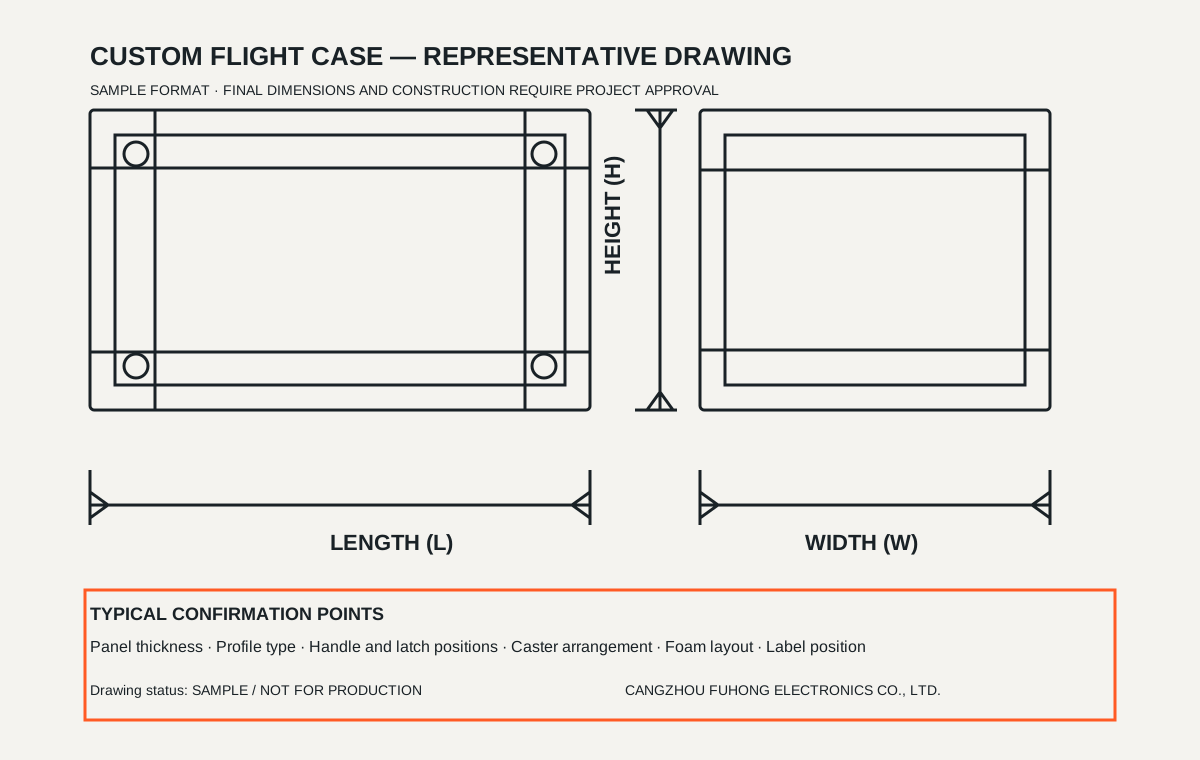
SAMPLE DRAWING
Three-view case definition.
Representative format only. The L, W, H, materials and hardware positions are confirmed for each project.
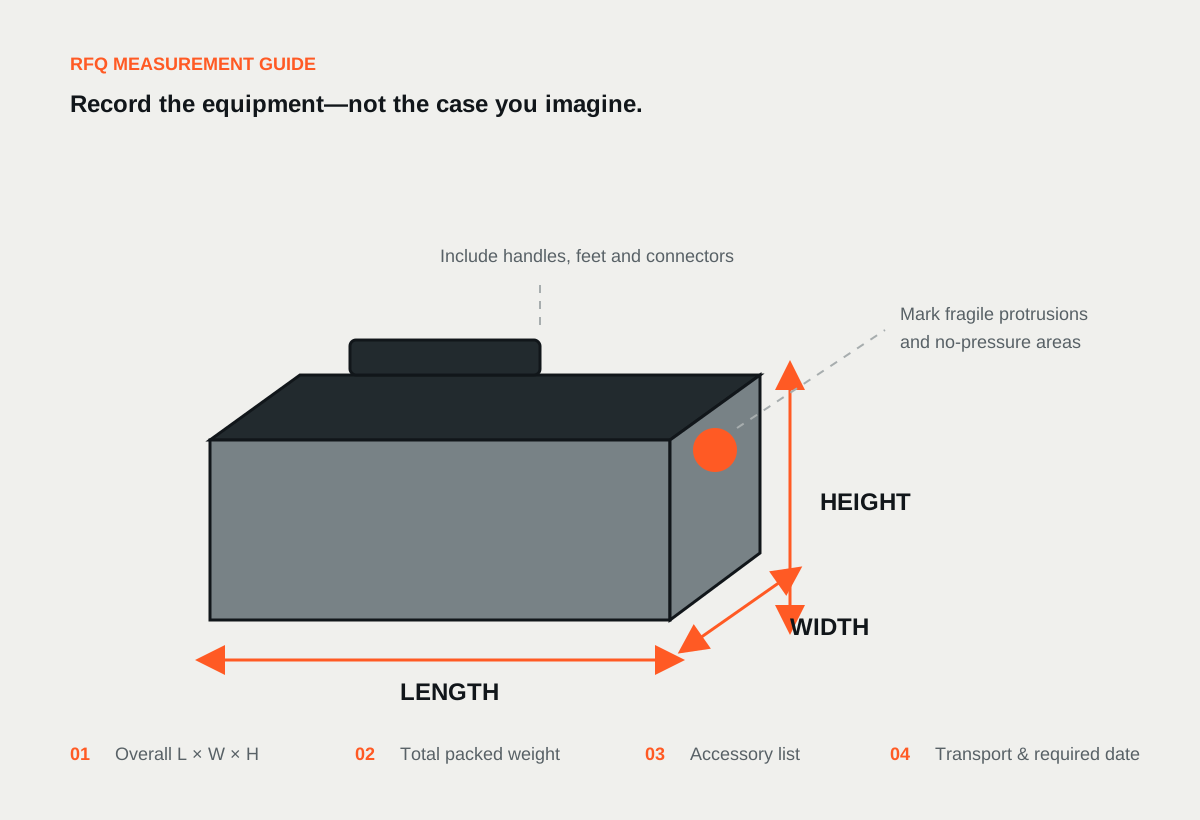
MEASUREMENT INPUT
Record the equipment before defining the case.
Overall dimensions are only the starting point. Protruding connectors, handles, removable accessories, operating clearances and fragile surfaces affect the usable cavity and the amount of cushioning available.
APPROVAL PATH
Control changes before cutting begins.
The drawing and bill of materials create a shared reference for the buyer, production team and inspector. Changes made after approval can affect dimensions, materials, cost and schedule, so they are recorded before production continues.
External size, opening direction, hardware locations, interior layout and selected materials are confirmed by the buyer.
A paid physical prototype can be used when fit or handling needs confirmation. Otherwise production starts from the approved documents.
SAMPLE PRE-SHIPMENT CHECKLIST
Visible checks, recorded by project.
| Check item | Reference | Result | Record |
|---|---|---|---|
| External dimensions | Approved drawing | Pass Hold | Measurement / photo |
| Hardware operation | Approved BOM | Pass Hold | Visual / functional |
| Foam fit and cavity layout | Approved sample or drawing | Pass Hold | Photo |
| Finish and labeling | Project requirement | Pass Hold | Photo |
| Packing and quantity | Purchase order | Pass Hold | Packing photo |
Sample checklist—not a completed inspection report or test certificate.
DRAWINGS
What to send for a production drawing.
Manufacturer, model and a dimensioned drawing where available.
STEP, DXF, DWG, PDF or even a photo with a tape measure in frame.
If the insert goes into an existing case, the inside dimensions matter more than the outside.
Which side opens, and whether the item is lifted vertically or slid out.
Anything that has to stay attached, stay upright, or be reachable while the case is closed.
We issue a drawing, you mark it up, and production starts only after you approve it.
STANDARDS
Drawing conventions we work to.
Dimensions in millimetres with a stated datum edge, so a cavity position is unambiguous.
Stated per cavity rather than as a single block depth, including multiple-depth routing where it applies.
Stated where they matter. Where they are not stated, foam routing is worked to normal manufacturing tolerance and panels to the cutting tolerance of the saw.
Panel type and thickness, foam grade and colour, and hardware specified on the drawing rather than agreed verbally.
Drawings carry a revision. Production runs from the revision you approved, and changes are issued as a new revision.
Where logos or layout labels are applied, position and method are specified.
APPROVAL
How a drawing gets approved.
The loop is short, and nothing is cut until it closes.
Equipment data, case internal dimensions and handling notes.
Dimensions, materials, foam layout and hardware in one document.
Comments, corrections or approval. Amendments are returned as a new revision.
Approved revision goes to cutting. The approved drawing is the inspection reference.
LIMITS
Where engineering support stops.
The case protects your equipment. It does not change what your equipment is approved for.
Testing that is not specified is not testing. The standard and method come from you.
If your dimension conflicts with ours we will flag it, but the approved drawing is your call.
From a photo we can advise. To guarantee fit, we need the internal dimensions.
COMMON ERRORS
Drawing mistakes we see most often.
A folded drone or a tool with its handle retracted measures differently. State which configuration the number refers to.
Connectors, handles and lens hoods are what make an insert too tight. Measure the widest point in every direction.
For an insert, only the internal dimension is useful. External size tells us nothing about the cavity.
Where a fit has to be tight, say how tight. Where it does not, saying so saves machining time and cost.
Whether the item lifts out or slides out changes the cavity geometry, not just the case opening.