Plywood, aluminum profiles and hardware are sourced to the approved specification, then cut, fitted and assembled at our Cangzhou production site.
Custom case system / 01
Custom Plywood
Flight Cases
Built around equipment size, weight, handling method and transport conditions—not selected from a fixed catalog.
Configure on WhatsApp ↗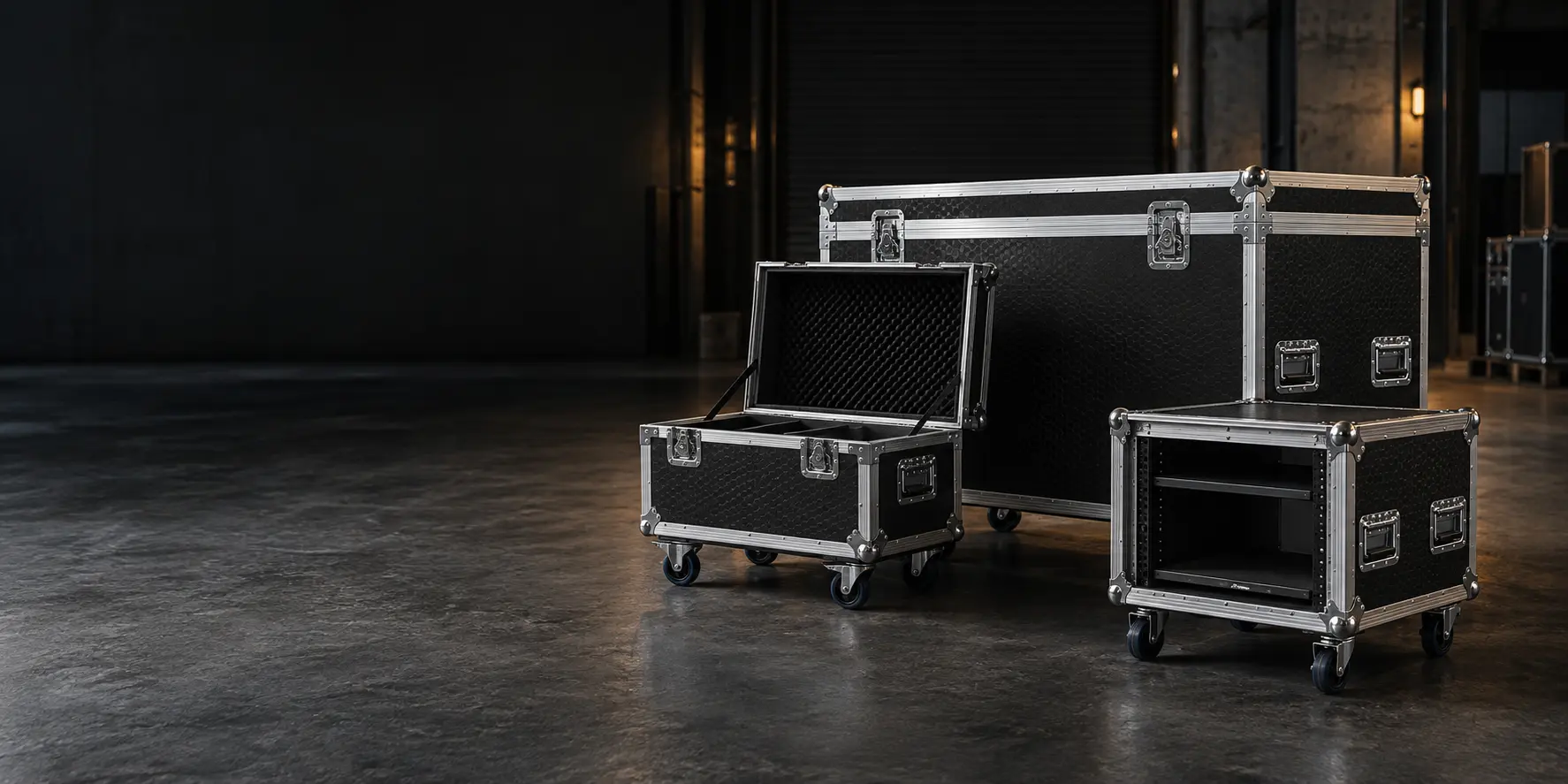
CONFIGURATION OPTIONS
One build, defined around the job.
Recessed handles, butterfly latches, hinged or lift-off lids, rubber feet and caster configurations.
Foam lining, CNC inserts, partitions, rack rails, shelves, trays or accessory compartments.
Printed marks, engraved plates, labels and project-specific panel colors can be quoted when required.
MATERIAL & HARDWARE GUIDE
Common options, selected by load and use.
This is a practical selection guide rather than a fixed catalog. Final availability, dimensions, color, load rating and component model are stated in the quotation or approved bill of materials.
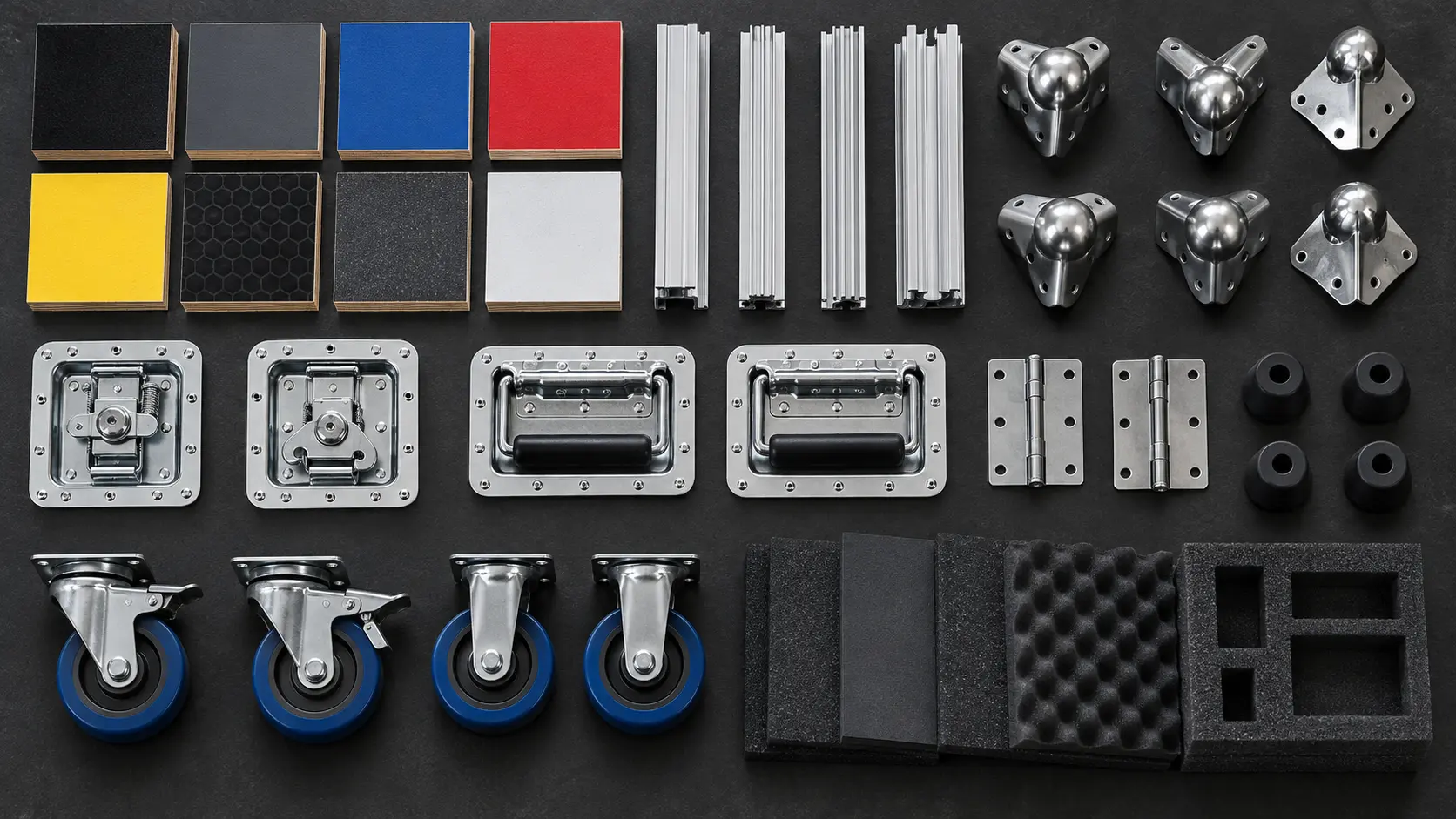
| Panel construction | Phenolic-laminated plywood: commonly quoted in approximately 6, 9 or 12 mm. Thicker panels are normally considered for larger cases, heavier loads or repeated handling. |
|---|---|
| Lightweight option | PP honeycomb or other composite panel: considered when reducing empty-case weight matters. Edge construction, hardware fixing and order quantity must be reviewed with the design. |
| Panel colors | Black is the standard starting point. Blue, red, gray, white and other laminate colors may be sourced subject to supplier stock and minimum material quantity. |
| Profiles & corners | Aluminum edge and tongue-and-groove profiles with compatible steel ball corners, braces and fasteners, sized to match the selected panel. |
| Latches & handles | Recessed butterfly latches, surface or recessed spring handles, hinges, lid stays and lockable options can be configured by access and security need. |
| Mobility | Rubber feet, corner wheels or swivel casters; braked and unbraked combinations are selected after case weight, center of gravity and floor conditions are known. |
| Interior | EVA, PE/XPE and PU foam, carpet lining, partitions, trays, rack rails and accessory compartments can be combined around the equipment. |
| Branding | Screen printing, labels, engraved plates and other identification methods can be quoted from buyer-supplied artwork. |
If the project requires a named load, water-resistance, flame, ESD or transport standard, include it at RFQ stage so the material grade, test method and acceptance criteria can be quoted correctly.
PROJECT TIMING GUIDE
Planned from approval, not from first message.
Custom case timing depends on drawing complexity, component availability, prototype approval, quantity and testing. The ranges below are useful for early planning; the committed schedule is the one written in our quotation.
Usually 1–3 working days to clarify equipment data and prepare a quotation direction.
Usually 2–5 working days after the requirement is complete, including buyer comments.
Often 7–15 working days after drawing and material approval, when a physical sample is requested.
A common planning range is 15–30 working days after final approval; quantity and materials can change this.
Export packing and dispatch are arranged after inspection. Transit time is quoted separately by route and Incoterm.
Planning ranges are not guaranteed lead times. Urgent projects should include the required arrival date, destination and transport method in the first inquiry.
What to send first
Equipment photos or drawing · L × W × H · total weight · quantity · destination · required date · how it will be transported
WhatsApp +852 7084 0732 ↗SPECIFICATION
Panel, hardware and interior.
Plywood or laminated board, cut to the approved dimensions. Thickness follows the load and handling rather than a single house standard.
Aluminium profile and ball corners at the load points, with the profile matched to panel thickness.
Handles, latches, hinges, casters and braced caster boards specified per build. All sourced to the approved specification.
EVA, PE, XPE or PU foam, routed rather than cut, with laminated or flocked facing where the equipment surface requires it.
Caster choice depends on total loaded weight and the floor surface the case will actually move across.
Lid, hinged front, removable front or drawer configurations, chosen around how the equipment is used at the destination.
CONFIGURATIONS
Case types we build to order.
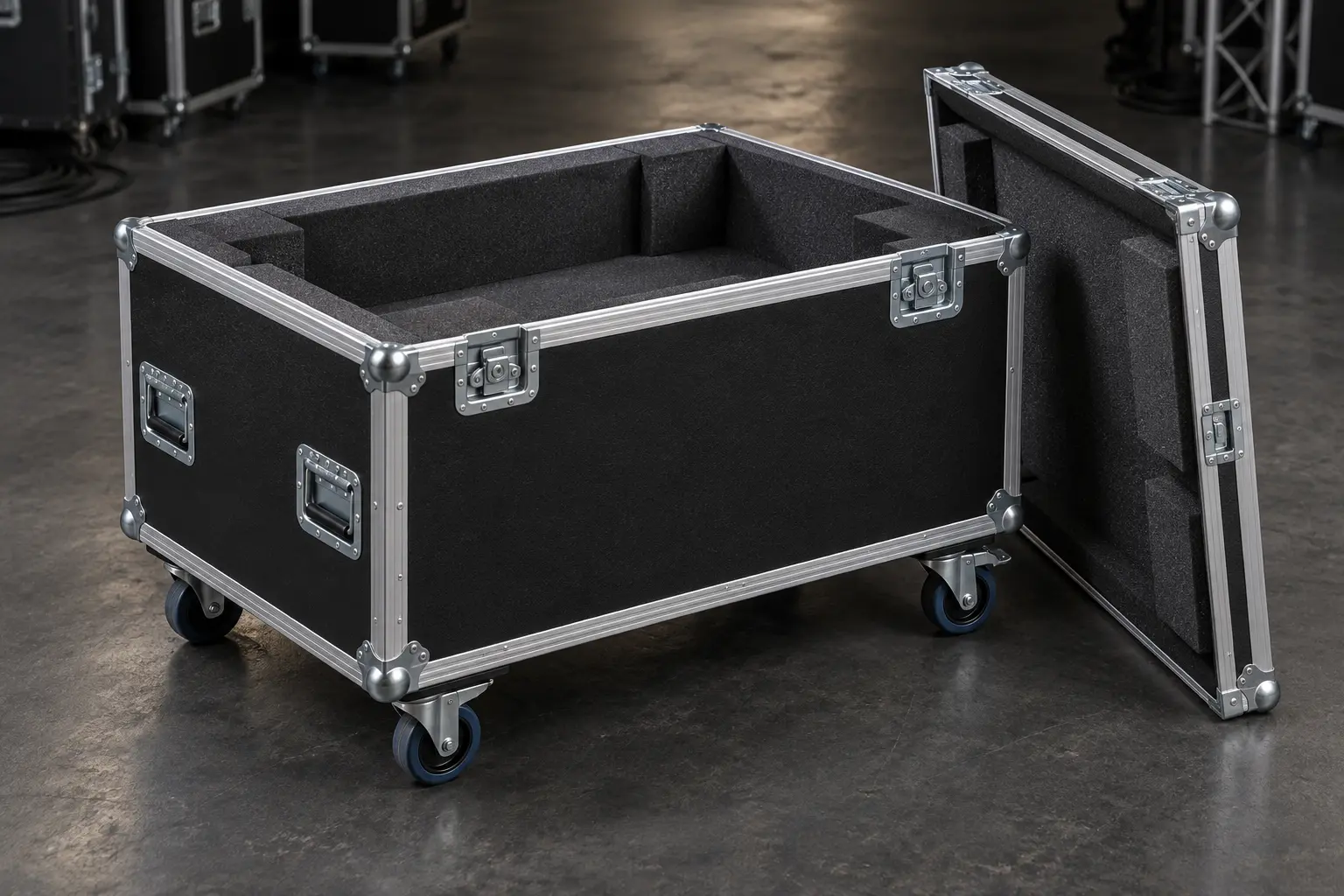
The baseline configuration. Equipment is lifted out from above and the case usually travels upright.
Front access for rack-mounted or shelf-loaded equipment, with the front panel matching the case opening.
Where the equipment is slid out rather than lifted, or where a full-height opening is needed in the field.
Used where accessories travel separately from the main unit and are accessed independently.
Long or bulky items where the case is moved on casters and loaded by equipment rather than by hand.
RELATED
Other routes to the same result.
Order the insert only. Send the internal dimensions and we route to them.
Consider a flat-pack kit, which ships panels, profiles, hardware and machined foam as one set.
A paid prototype built to the production drawing is the cheapest way to find out.