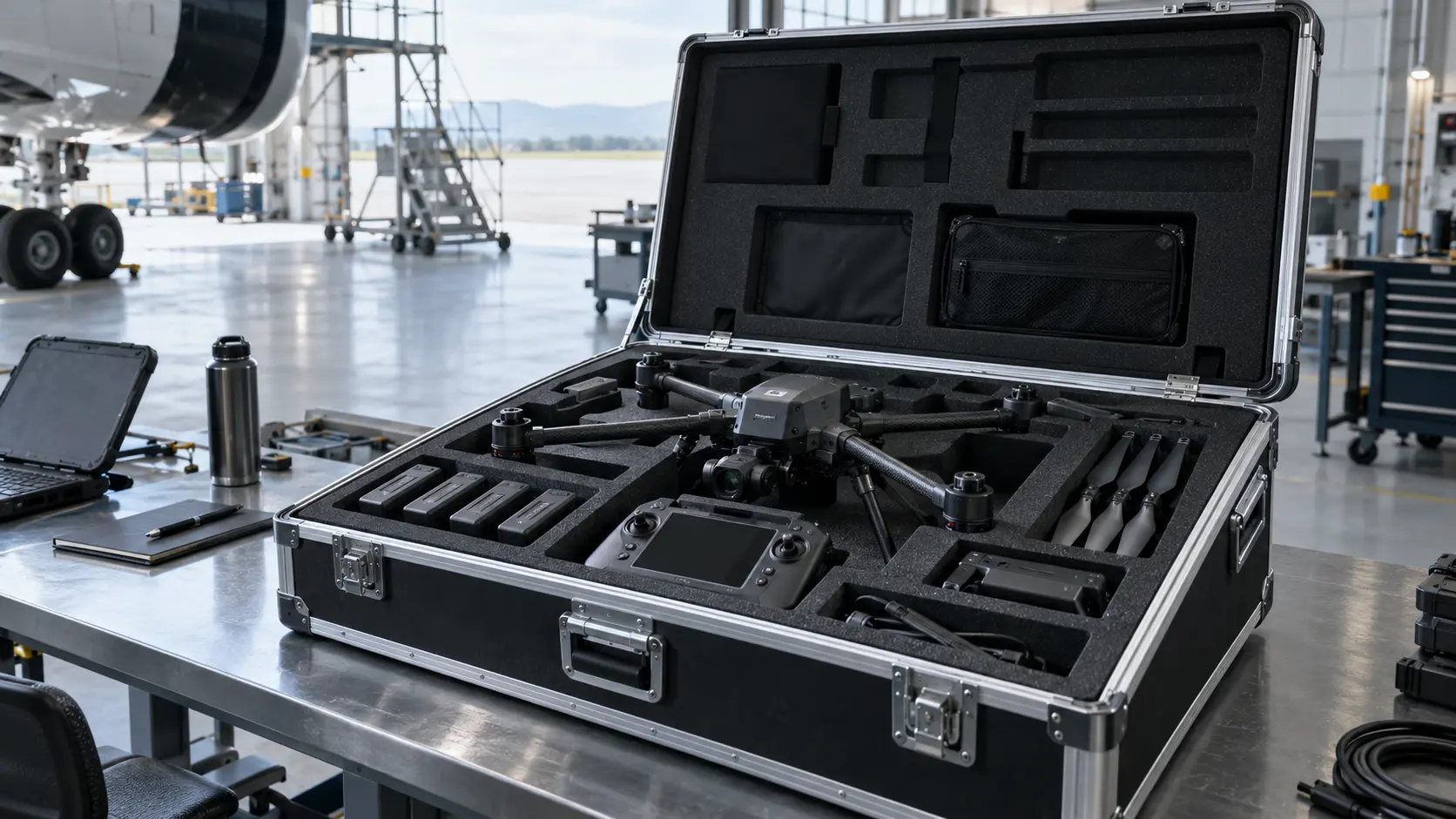
01 / FIELD SYSTEMS
Drone & UAV
Cases for aircraft, payloads, ground stations, controllers, batteries, chargers and field accessories, with attention to transport state and rapid setup.
Review UAV case planning ↗Application engineering
A UAV field kit, a laboratory instrument and a touring rack do not need the same interior, access or handling system. We use the application to define the protection questions before selecting the case structure.
Cases for aircraft, payloads, ground stations, controllers, batteries, chargers and field accessories, with attention to transport state and rapid setup.
Review UAV case planning ↗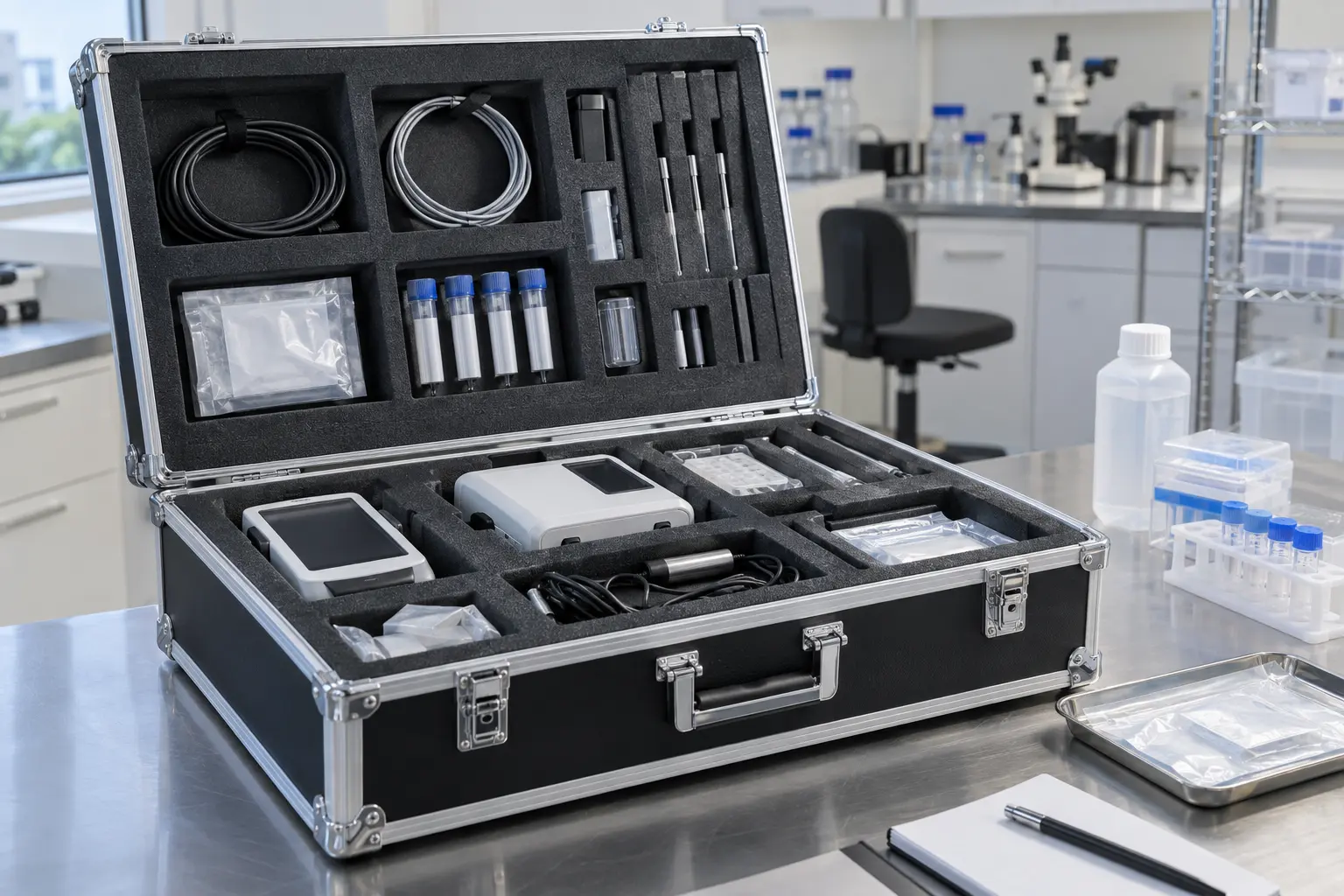
Protective layouts developed around device sensitivity, accessory control, cleaning needs and buyer-specified documentation.
Review medical case planning ↗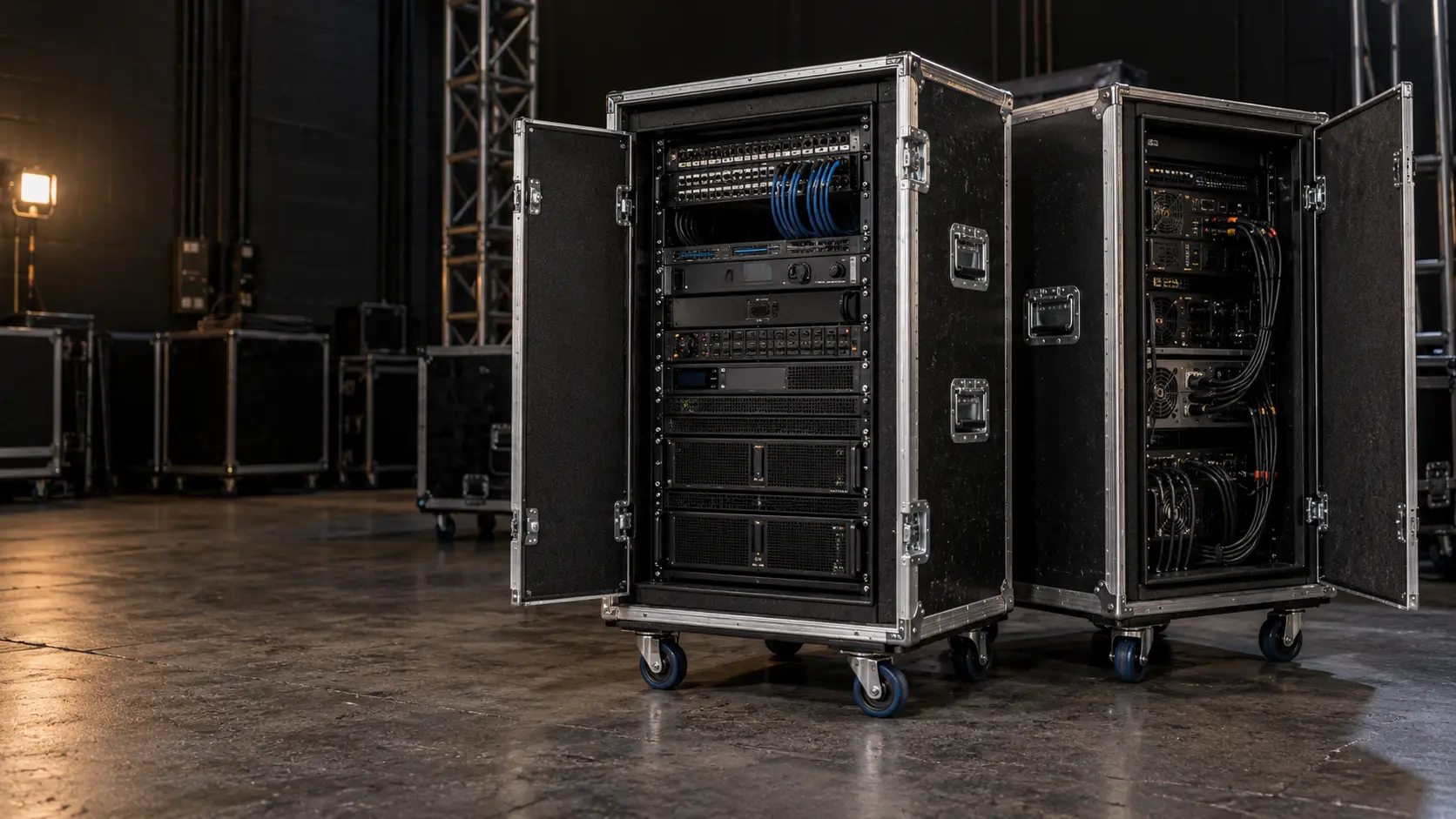
Road cases and mobile rack enclosures planned around rack-unit height, cable access, ventilation, operating position and repeated handling.
Review rack case planning ↗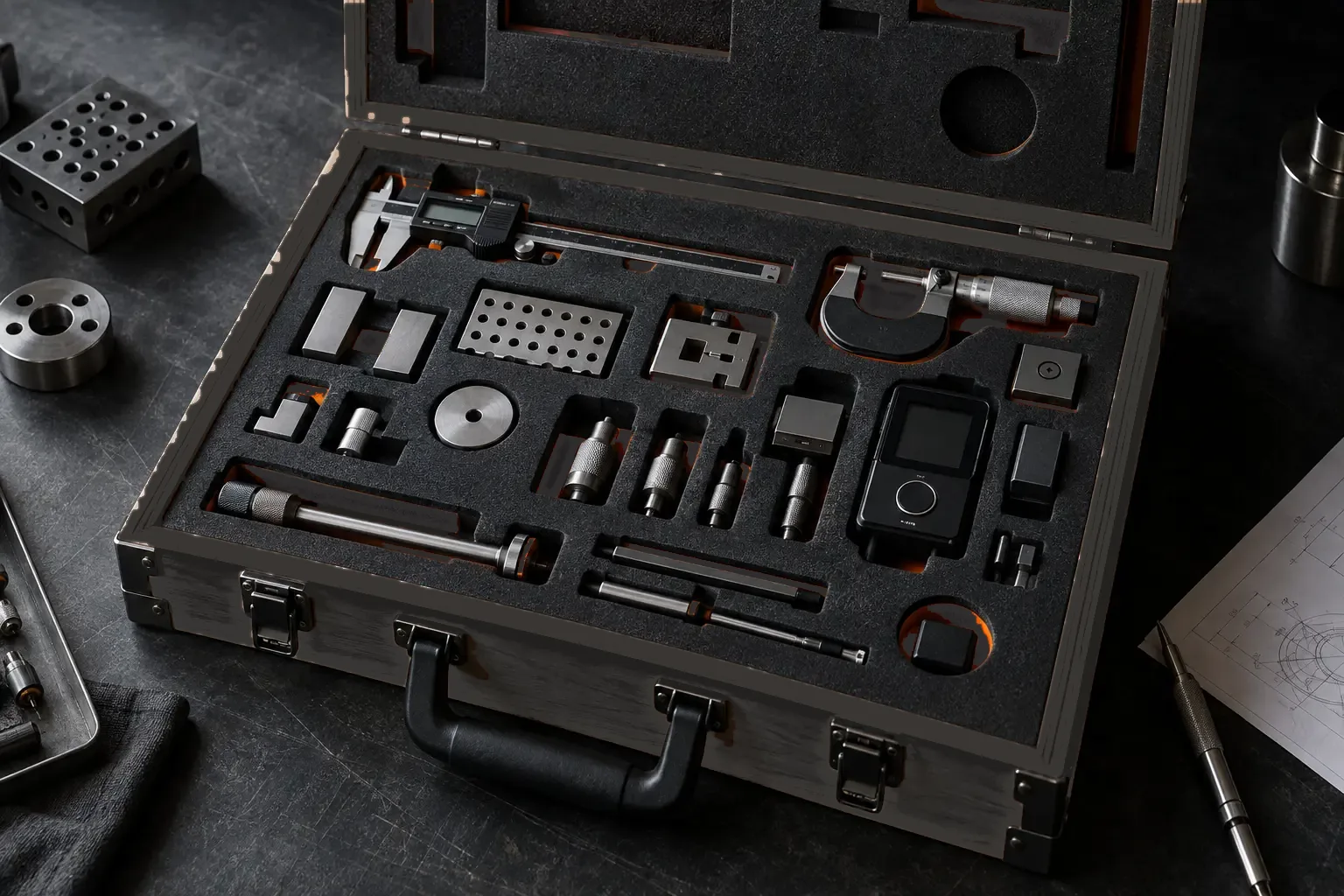
Equipment-specific cavities, accessory positions and cushioning for inspection tools, electronics, optical devices and field service kits.
Review instrument case planning ↗Fixtures, mixers, speakers, microphones, cables and production accessories requiring repeated transport and fast access.
Assemblies, control units, sensors and calibration equipment with fragile connections or multiple accessories.
Project-specific equipment can be reviewed without making automatic military or certification claims. Required standards must be provided by the buyer.
Portable product displays, sales demonstration sets and technician kits that need an organized presentation and repeatable packing layout.
Lightest build. Foam insert and a soft or light case, sized to fit cabin or boot constraints.
Reinforced edges and casters where the case is handled repeatedly by people who did not pack it.
Heavier panel, braced corners and a foam layout that keeps contents fixed through handling and pressure changes.
Moisture management matters more than impact. Closed-cell foam and, where needed, desiccant provisions.
Where several items travel together, the layout is designed around setup order rather than packing order.
Tell us the transport mode and destination and we will recommend a level rather than quote the heaviest option.
Airframes, payloads, ground stations, controllers, batteries and field tooling.
Camera bodies, lenses, support hardware, audio and lighting control.
Benchtop analysers, monitors, probes, consumables and calibration tooling.
Calibrated instruments, gauges, measuring equipment and their accessories.
Rack-mounted audio, video, lighting control and power distribution.
Controllers, drives, sensors, inspection equipment and test rigs.
Tool kits, service cases and 5S/6S workshop storage.
Pre-cut panels, profiles, hardware and machined foam for local assembly abroad.
Four questions decide most of a specification. If you can answer them, we can quote without a prototype.
Road, air, sea or hand carry. Sea freight shifts the priority from impact to moisture.
Who moves it, how often, and whether they packed it. Repeated handling drives edge and caster specification.
Total weight of the kit, not the equipment alone. This drives panel and mobility hardware.
Whether the crew works out of the case or unpacks it fully. This decides the access configuration.
You do not need all of it to start. But each item you supply removes one round of questions.
Model numbers, or a photo with a tape measure in frame.
Where the equipment lives and how it gets there.
Who handles the case and whether they packed it.
Any standard the project has to meet, supplied with the enquiry.
If a project needs to meet a standard, the standard has to come from you and be confirmed against an agreed test method.
Impact and moisture risks differ by mode. The transport mode is part of the specification, not an afterthought.
Photos are useful for layout discussion. Precision cavities are routed from dimensions.
Nothing is cut until you approve the drawing.
Folded outline, propeller span, battery transport rule and ground station footprint.
Loaded weight, rack units, and depth behind the rails for connectors and cable bend radius.
Footprint including rear connectors, plus the cleaning regime the insert has to survive.
Each instrument's outline at its widest point, and whether any part may not be inverted.
Finished case drawing, destination, and confirmation that local assembly is available.